


New twin-screw extruder and rheometer handed over
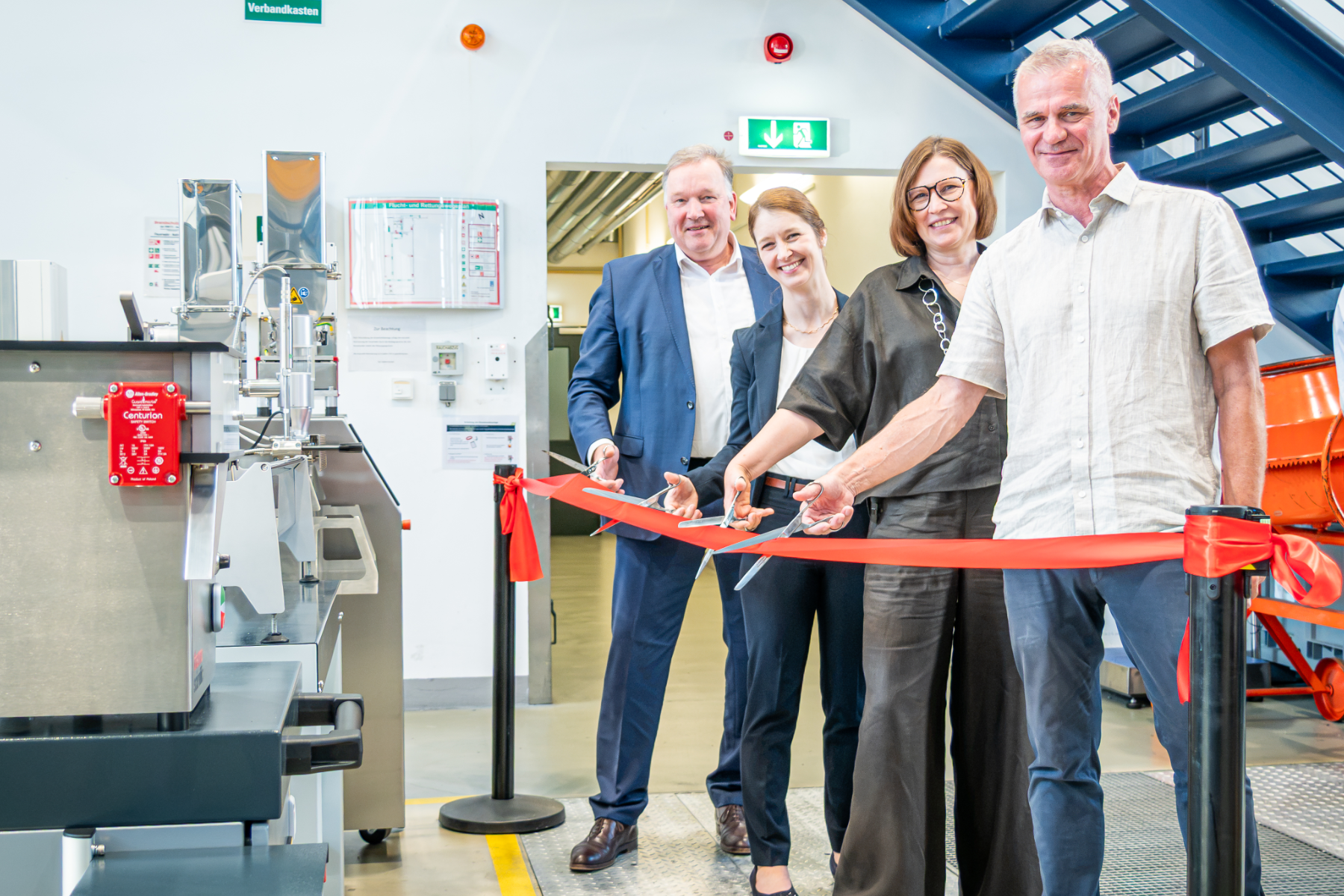
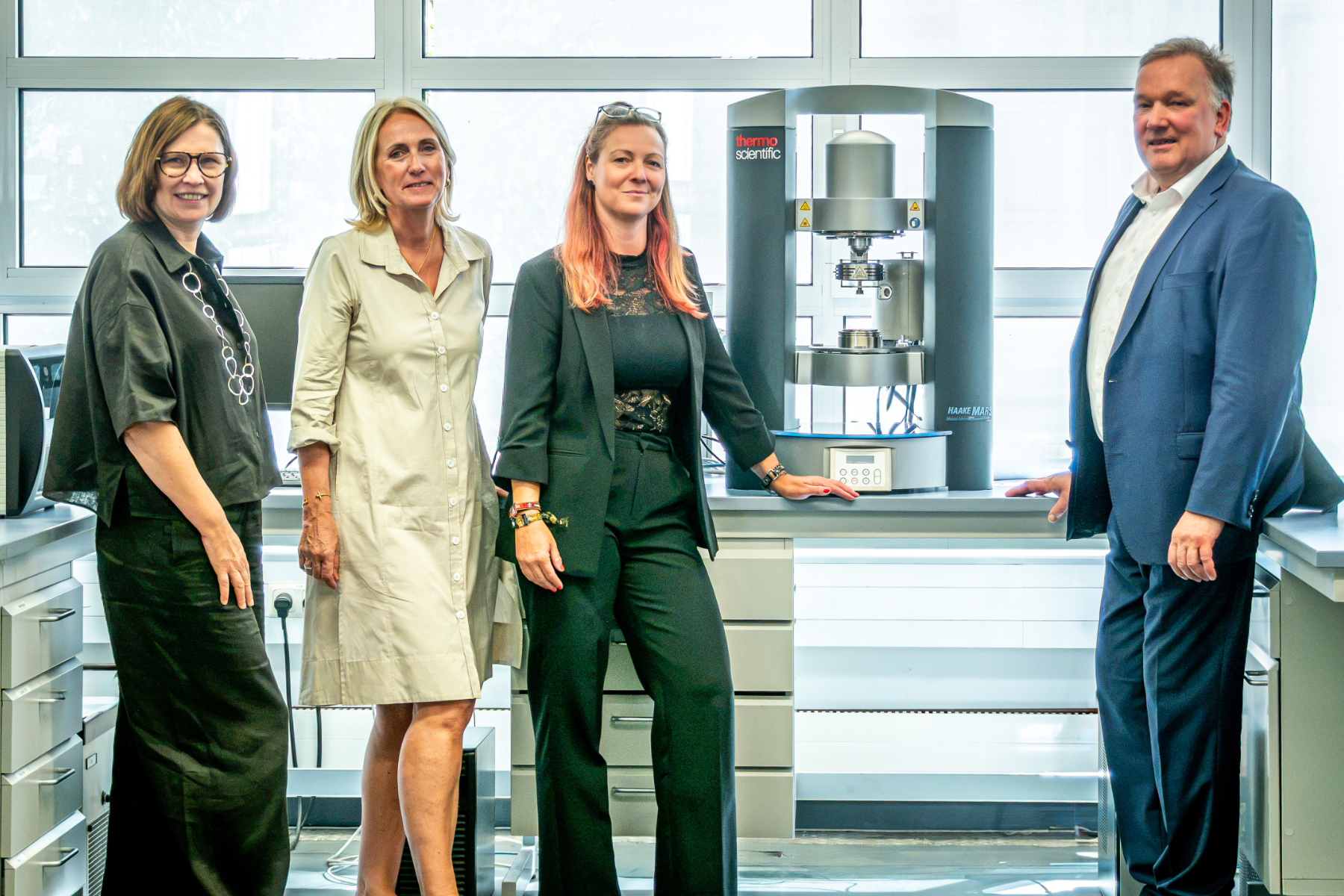
Thermo Fisher Scientific has provided the IKV Aachen with a Thermo Scientific™ Process™ 16 twin-screw extruder and a Thermo Scientific™ HAAKE™ MARS™ 40 rheometer for research purposes. With these two instruments, the IKV is expanding its capabilities to characterise new materials and recycled materials and to investigate their behaviour during processing.
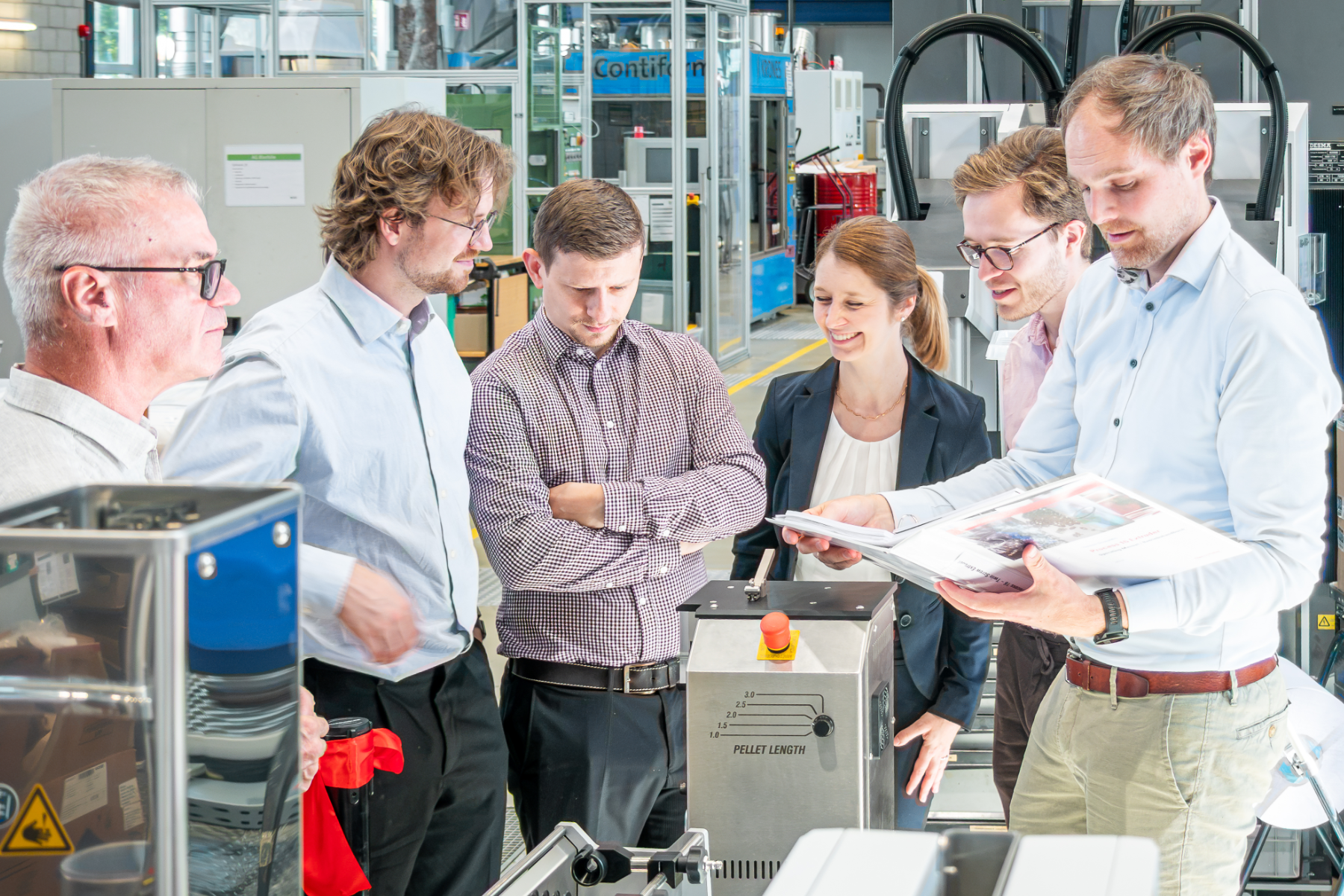
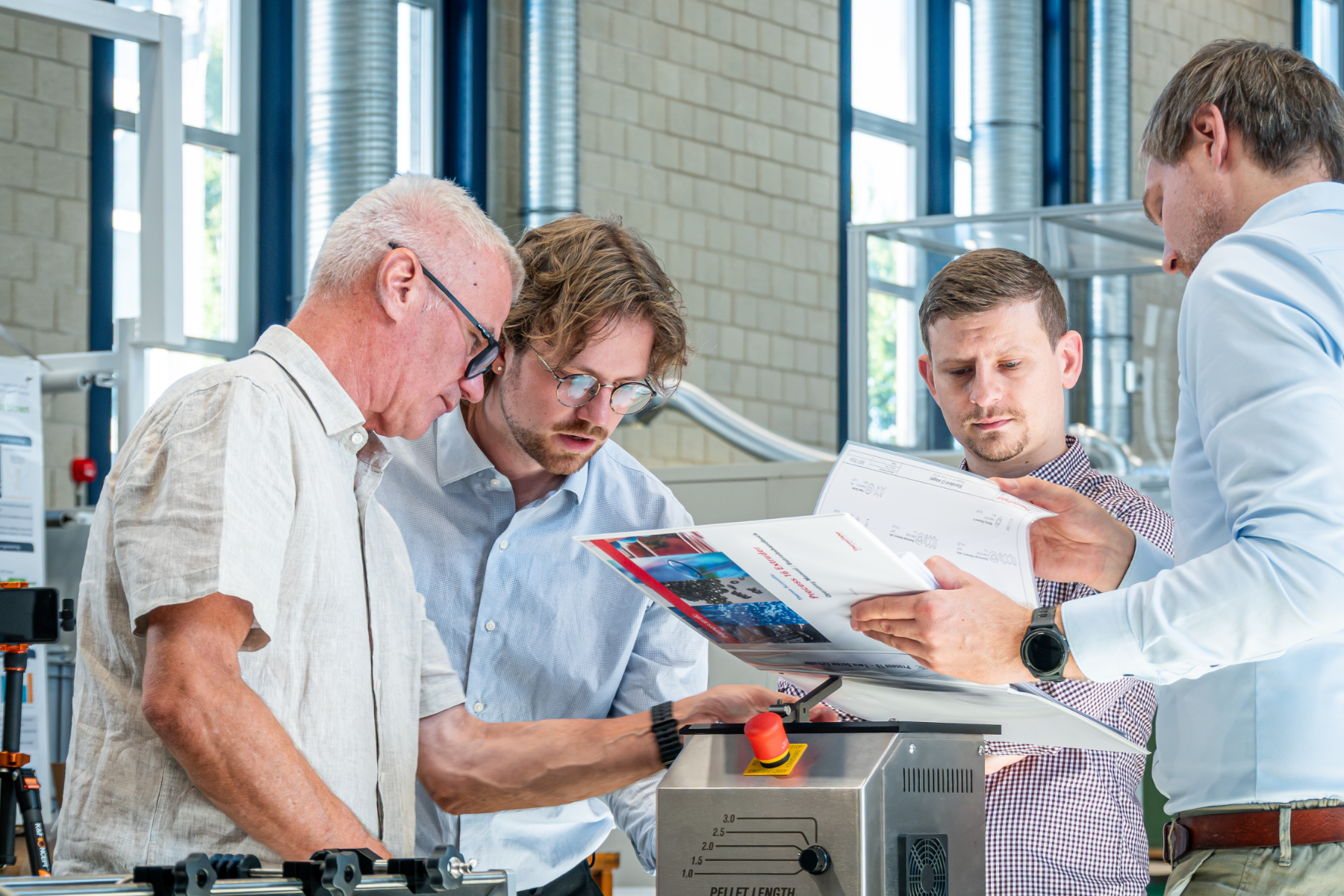
The new twin-screw extruder enables the compounding of small quantities of material. This allows for the systematic investigation of different formulations and process parameters—even for new materials such as vitrimers, which are currently available only in limited quantities for research purposes or are very expensive. Promising approaches can first be tested on a small scale and then further investigated on larger systems. The new rheometer complements the processing tests with rheological analyses.
Among other things, the new equipment will be used for work with post-consumer recycled materials and engineering thermoplastics, as well as for AI-supported formulation development. In this way, it supports two of the IKV’s strategic research areas: digitalization and the circular economy. In this context, the IKV is investigating, among other things, how the composition of the recycled materials—such as the proportion of compatibilizers—influences gel formation and how the quality of the processed material can be improved through appropriate filtration strategies.
 © IKV
 © IKV
 © IKV
 © IKV
“When it comes to new materials and recycled materials, it’s not enough to look at their properties in isolation. What matters is how they behave under real-world processing conditions,” says Prof. Dr. rer. nat. Rainer Dahlmann, Scientific Director and Head of the Center for Plastics Analysis and Testing (KAP) at IKV. “With the Process 16 extruder, we can investigate different formulations and process parameters even when only small amounts of material are available. The HAAKE MARS 40 rheometer complements these tests with rheological characterization, thereby providing important insights into subsequent processing steps. This allows us to systematically link mechanisms of action with findings regarding material properties and processing.”
In addition to the equipment it provides, Thermo Fisher Scientific brings its expertise in extrusion, rheology, and analytical technologies to the collaboration. Plans also include technical exchanges on research challenges and the resulting new requirements for testing and extrusion. This will further facilitate the use of the new equipment in addressing scientific and industry-related questions.
“Our collaboration with the IKV combines our technologies for extrusion and rheology with research questions in the field of plastics engineering,” says Thobias Geissler, Product Line Manager at Thermo Fisher Scientific. “We are particularly interested in how insights from materials characterization can be applied to the development and processing of polymer materials. We see great potential here for further developing research approaches with a view to their industrial application.”