


Bachelor’s thesis or Master’s thesis
 © IKV
© IKVThematic Classification of your Thesis
The Packaging and Packaging Waste Regulation (PPWR) will require packaging manufacturers to use a certain proportion of recycled materials in their packaging products from 2030 onwards. Owing to local material variations in the extrudate, however, it poses a considerable challenge to extrude films with a uniform coating thickness across their entire width. This can lead to insufficient barrier properties in certain areas, which can be specifically improved through the application of plasma barriers.
For the applied plasma barriers to function reliably in industrial use, their quality must nevertheless be continuously ensured. Since the coating is carried out on moving film material during the ongoing process, fast and non-destructive testing methods are required for this purpose. These should enable seamless monitoring of the coating properties, such as the barrier effect and coating homogeneity, already during production.
Background of your Thesis
The IGF project ‘HSI – Investigation of Hyperspectral Imaging as a Potential Quality Assurance Technology for Plasma-Functionalised Packaging’ is concerned with the testing of a novel measurement method for the process monitoring of coated films.
Scope of your Thesis
Within the scope of this work, film samples are produced by means of Plasma Enhanced Chemical Vapour Deposition (PECVD) and characterised with regard to their barrier function. Polypropylene (PP) and polyethylene (PE) films serve as substrates. These are first coated and subsequently examined using various analytical methods.
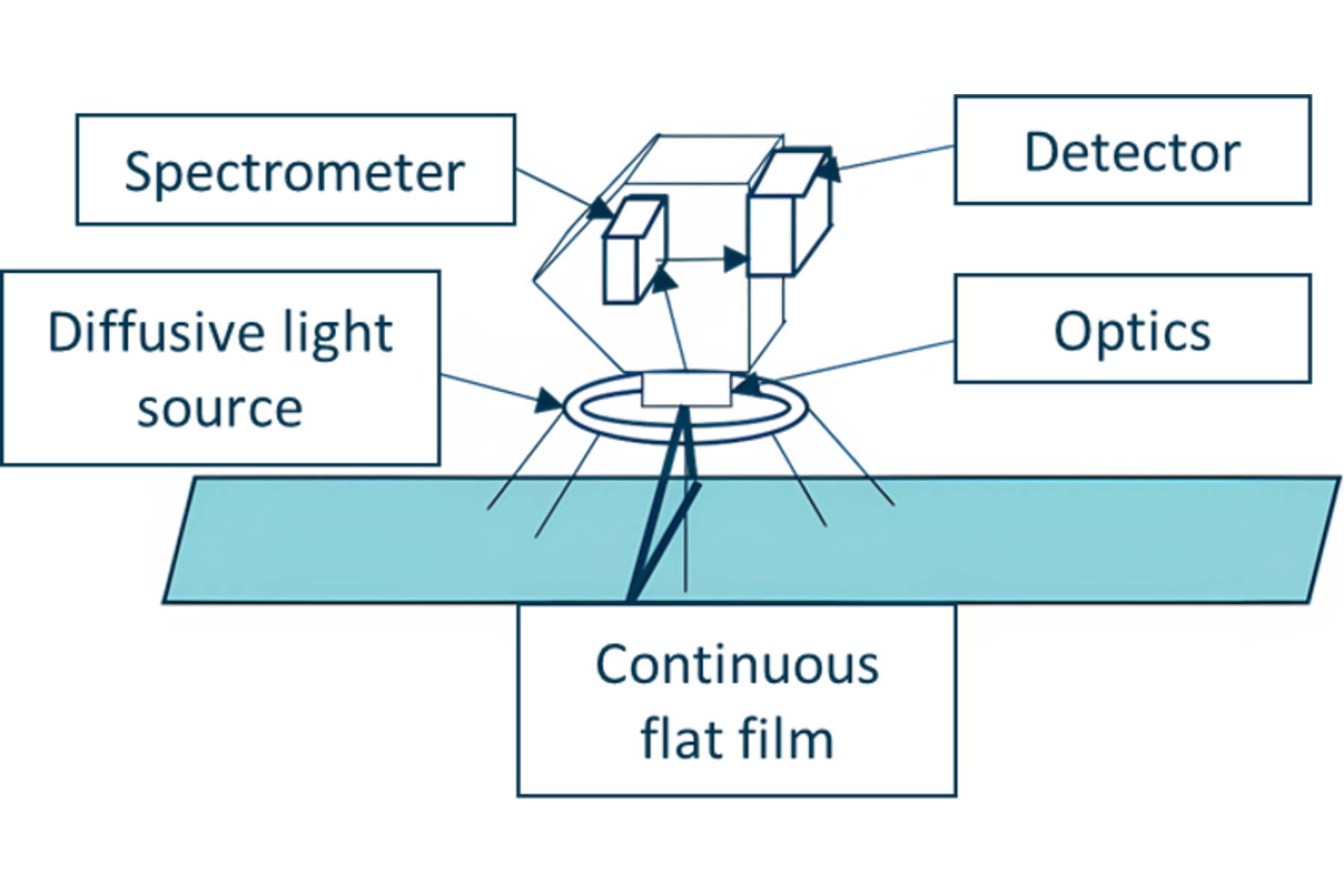
On the basis of the data thus obtained, a regression model is developed that relates the acquired spectral data to the process parameters as well as to the oxygen transmission rate (OTR) values. Depending on the scope of the work, the analyses are extended to include hyperspectral imaging (HSI). By comparing the hyperspectral data with the spectral data collected beforehand, a statement is to be made regarding the achievable measurement accuracy.
I will, of course, assist you in familiarising yourself with the broad field of plasma coatings and take your creative ideas into consideration. Close supervision is essential, particularly for thesis projects, and will serve as the foundation for your successful completion.
| For a Bachelor`s thesis, you will address the following tasks: Additionally for a Master`s thesis | |
| Coating of film samples via PECVD under variation of different process parameters | Characterisation of the coating chemistry by means of hyperspectral imaging |
| Characterisation of the coating chemistry by means of infrared spectroscopy | Development of a regression model on the basis of the HSI data |
| Development of a regression model on the basis of the IR data | Evaluation and comparison of the two analytical methods |
The specific content and timeline of your thesis will be determined in consultation with you, taking your prior knowledge into account. In addition, there is the possibility of addressing the topic in a modified form within the framework of a research laboratory or a project-based module.
Your Profile
- A degree in engineering or the natural sciences (General Mechanical Engineering, Industrial Engineering (Mechanical Engineering or Materials and Process Engineering), Materials Science, Environmental Engineering, Applied Chemistry, or Applied Polymer Science)
- Willingness to learn and engage with new challenges related to plasma technology
- An independent and structured approach to working
- Previous experience in a laboratory setting is desirable, but not required
AG Plasma offers you a dynamic, young team in which you and your skills can grow during the course of your thesis, with clear objectives and diverse tasks. If you are interested in contributing to the field of plastics processing with your creative ideas, please feel free to get in touch with me!