


Research Laboratory
 © IKV
© IKVTopic of the Thesis
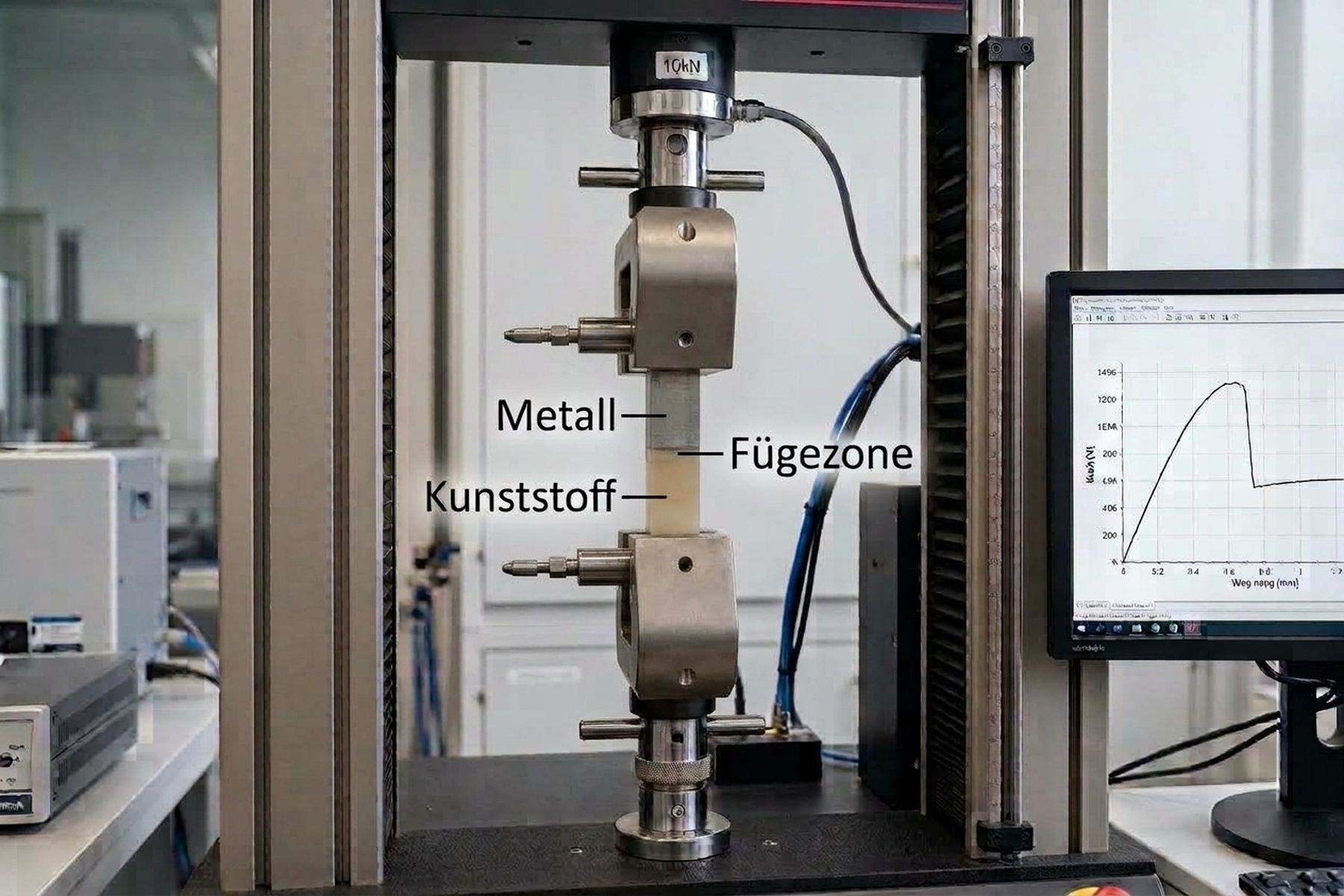
The hydrogen economy places the highest demands on materials and joining technologies: Structures must be extremely dense, lightweight, and yet highly durable. Metal-plastic hybrid joints are used precisely where such high-performance interfaces are required—for example, at connection points in innovative pressure tanks, for sealing and electrical connections in electrolyzers, or in flange systems for plastic-based piping. A direct bond between the materials can only be achieved through a weak micro-form-fit connection. Plasma coating of the metal samples specifically optimizes the adhesion of the laser-welded plastic to the metal plate to achieve a material- and form-fit bond without adhesives. In this project, you’ll dive right into applied research: You’ll fabricate your own plastic samples, join them to coated metal components via laser welding, and then characterize the hybrid composites mechanically and microscopically.
This thesis is related to this research project
This project paper is being written in the Joining Technology research group, which specializes in plastic welding and hybrid composites. In this research group, we focus on various welding processes and, through our research, investigate the creation of optimal joints between plastics as well as between plastics and metals.
Objective
The objective of this thesis is the fabrication and experimental characterization of laser-joined metal-plastic hybrid joints. Through the systematic recording of process parameters and subsequent mechanical testing, the effects of the process on the joint properties at the interface are to be understood and documented in a manner that ensures quality.
Your Tasks
| For your research lab, you will work on the following tasks |
| Production of laser-joined plastic-to-metal test specimens |
| Mechanical characterization and evaluation of the results |
| Microscopic characterization of the joint zone |
| Recording of test results |
Your Profile
- General Mechanical Engineering Program
- Basic understanding of plastics processing and joining processes
- Ability to work independently and in a structured manner
- Some prior laboratory experience is desirable
These are your benefits
- Work in a young, motivated team
- Independent work with close supervision
- Opportunity to contribute to current research projects
- Experimental work on industrial equipment
- Prompt processing, direct contact for questions during the process
- A varied mix of experimental work and data analysis
- Can start immediately
If you’re interested in this assignment, please feel free to contact me. We’ll work out the exact scope and timeline together on a case-by-case basis.