


Optimized melt filtration to reduce gels in PCR-grade polyethylene
When using polyethylene recyclates in film applications, degradation due to crosslinking often leads to the formation of specks, so-called gels, in the extrudate. Gel formation is strongly influenced by the compound composition. Gels can quickly cause scrap or film breakage and negatively affect downstream processing steps (e.g. printing, lamination). Despite the importance of melt filtration in recycling, knowledge about the influence of melt filters on the production process (e.g. pressure drop, dissipation due to shear and elongational stresses) as well as their efficiency in reducing gels, especially in PCR processing, remains limited.
 © IKV
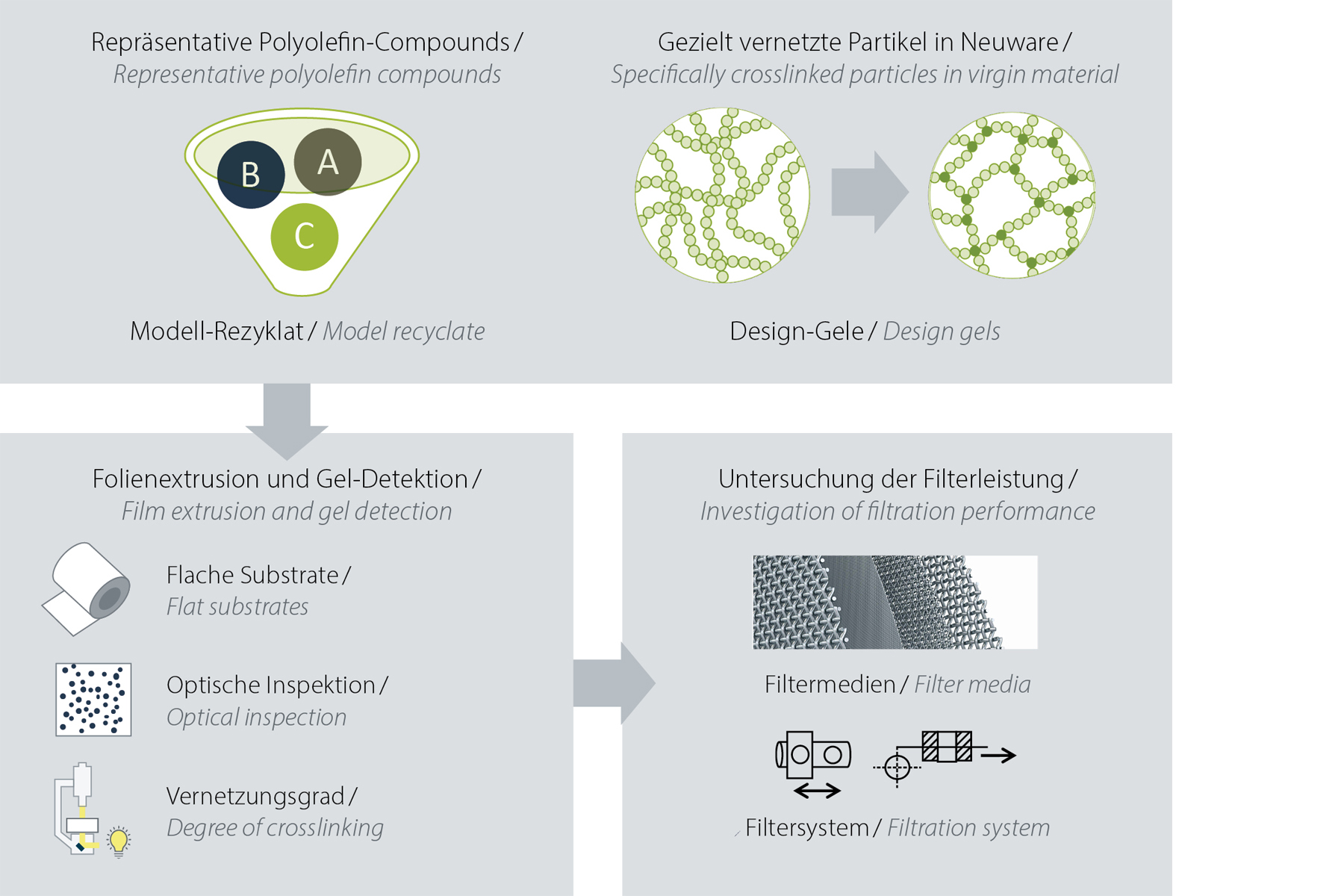
© IKVThe aim of this research project is to reduce gels in polyolefin (PO) compounds by developing an optimized filtration strategy to improve PCR material quality for film applications. For this purpose, PO materials contaminated with gels of varying degrees of crosslinking, as well as multiply extruded representative PO compounds (design recyclates), are filtered using different filter media and combinations. The materials are then analysed with respect to gel number and size. Considering pressure drop, throughput, melt temperature increase, material properties (e.g. viscosity, contamination level), and filter media, a suitable filtration strategy is developed, along with an improved understanding of material behaviour and processing in gel filtration.
Project data and Funding
We would like to thank the BMWE for funding the IGF project (grant number 24658 N) and our project partners for their collaboration.
